Once the plugin has been properly installed and activated, open Payment Page > Payment Gateways.
Connect your Payment Gateway#
Currently, Stripe and PayPal are supported, so you can configure the gateway you intend to use.

You can switch to LIVE and TEST modes at any time. The switchers control LIVE and TEST modes globally for all payment forms on your site.
Once you've connected the required mode, activate the relevant payment methods. Expand the gateway and check the methods that should be available to forms.
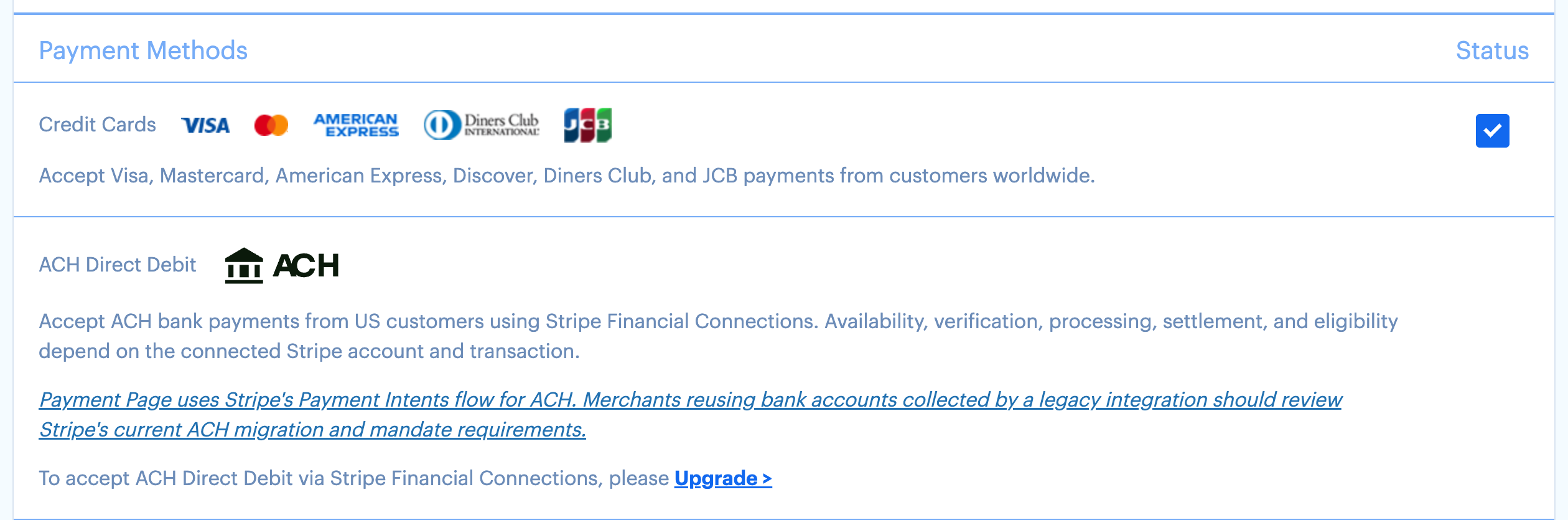
After you've finished connecting the payment gateway, the next step is to Select a Template.
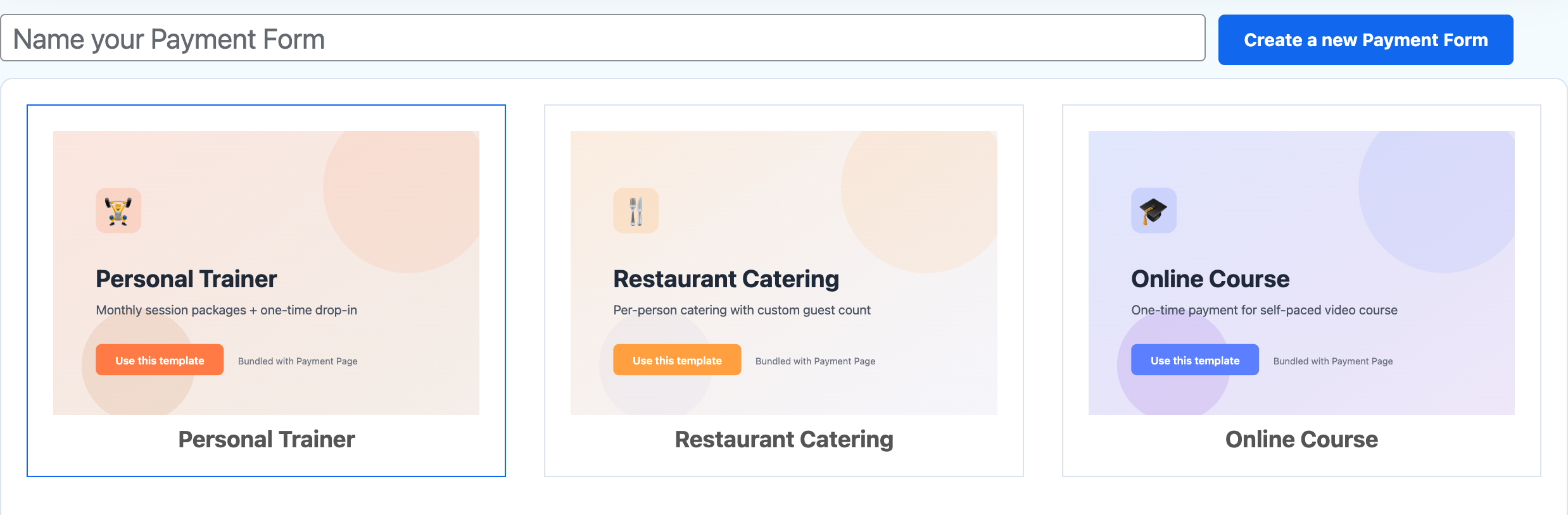
Select a Template#
Payment Page has two separate template catalogs: 22 payment-form setting templates (10 bundled in the plugin and 12 delivered from the public template endpoint) and 11 Elementor full-page layouts. The form-setting templates configure a Payment Form; the Elementor layouts import an entire page design. See the Templates gallery for examples.
When you choose an Elementor full-page layout and Elementor is not active, the Quick Setup interface can install and activate the free Elementor plugin after you confirm the action.
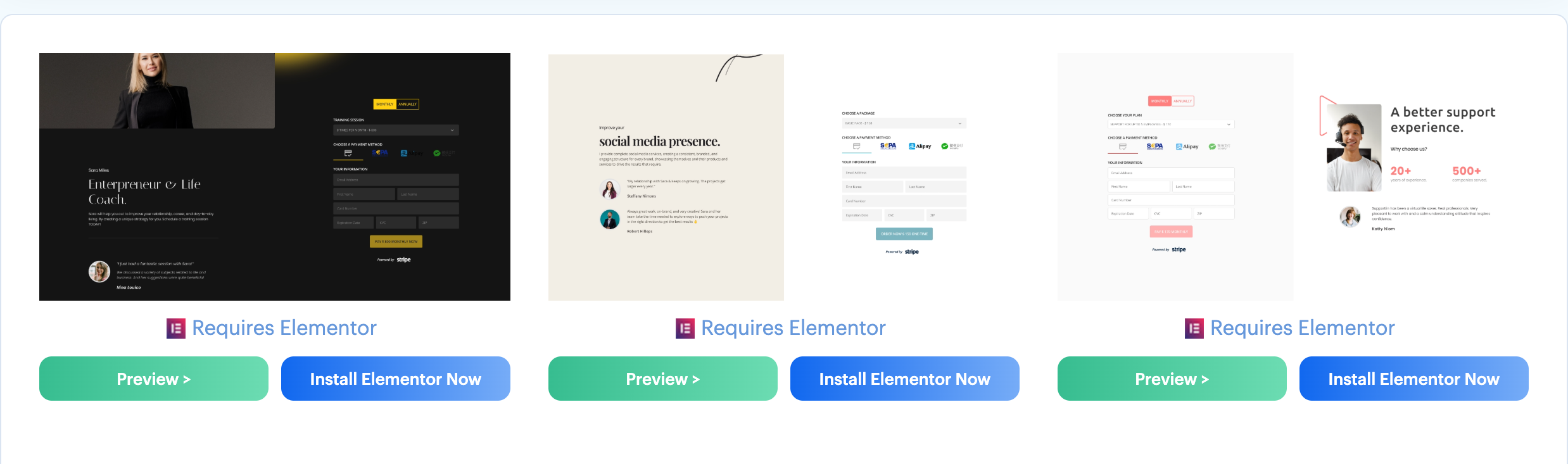
After Elementor is installed and active, the layout action changes from the install prompt to the available import workflow. Elementor controls its own installer and editor UI, so labels can vary with the installed Elementor version.
Manual Setup#
If the import process doesn't work for any reason, or you simply want to start fresh, create a Payment Form in Payment Page's native builder. You can embed that form with the bundled shortcode or select it in the Payment Page Form widget on an Elementor page.
Embed a form with the shortcode#
If you'd rather drop a payment form into a regular WordPress page, post, or text widget without using Elementor, you can use the bundled shortcode. Every payment form created in Payment Page > Payment Forms has a unique post ID; paste the shortcode anywhere WordPress shortcodes are supported:
[payment-page-payment-form id="123"]
Replace 123 with the ID of the form you want to render. The Payment Forms list screen shows the exact shortcode for each form in a "Shortcode" column for easy copy-paste. Draft forms only render for logged-in administrators (with a notice) so you can preview before publishing.
There is also a companion shortcode for the success page after a payment redirect:
[payment-page-success-details]
It reads the redirect URL parameters and renders the post-payment confirmation details.
Customize your Payment Page#
Use General for form content and behavior and Style for the native builder's appearance controls. The live preview updates beside the controls:
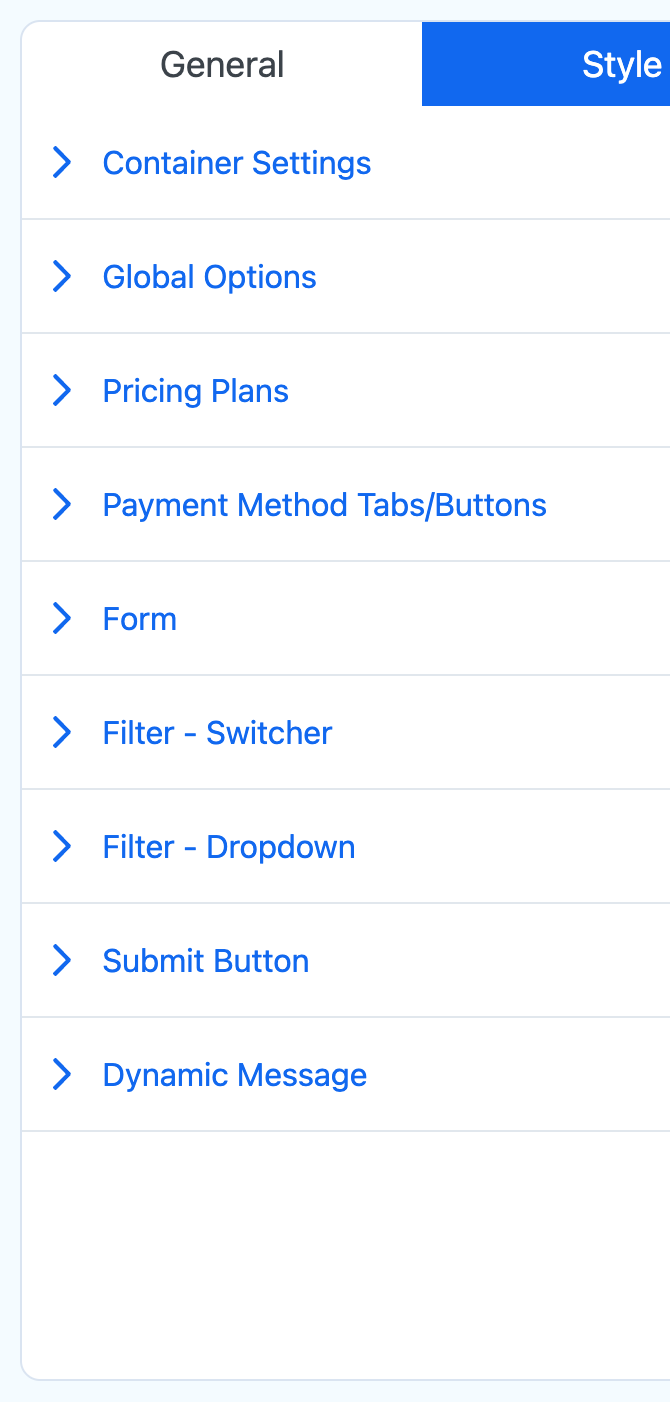
Save the Payment Form with Publish or Update. When using an Elementor page, make page-level layout changes in Elementor and publish or update that page separately.
Read more to learn about the customization options and features available with Payment Page.
Plans Pricing OptionsStyle Design Options