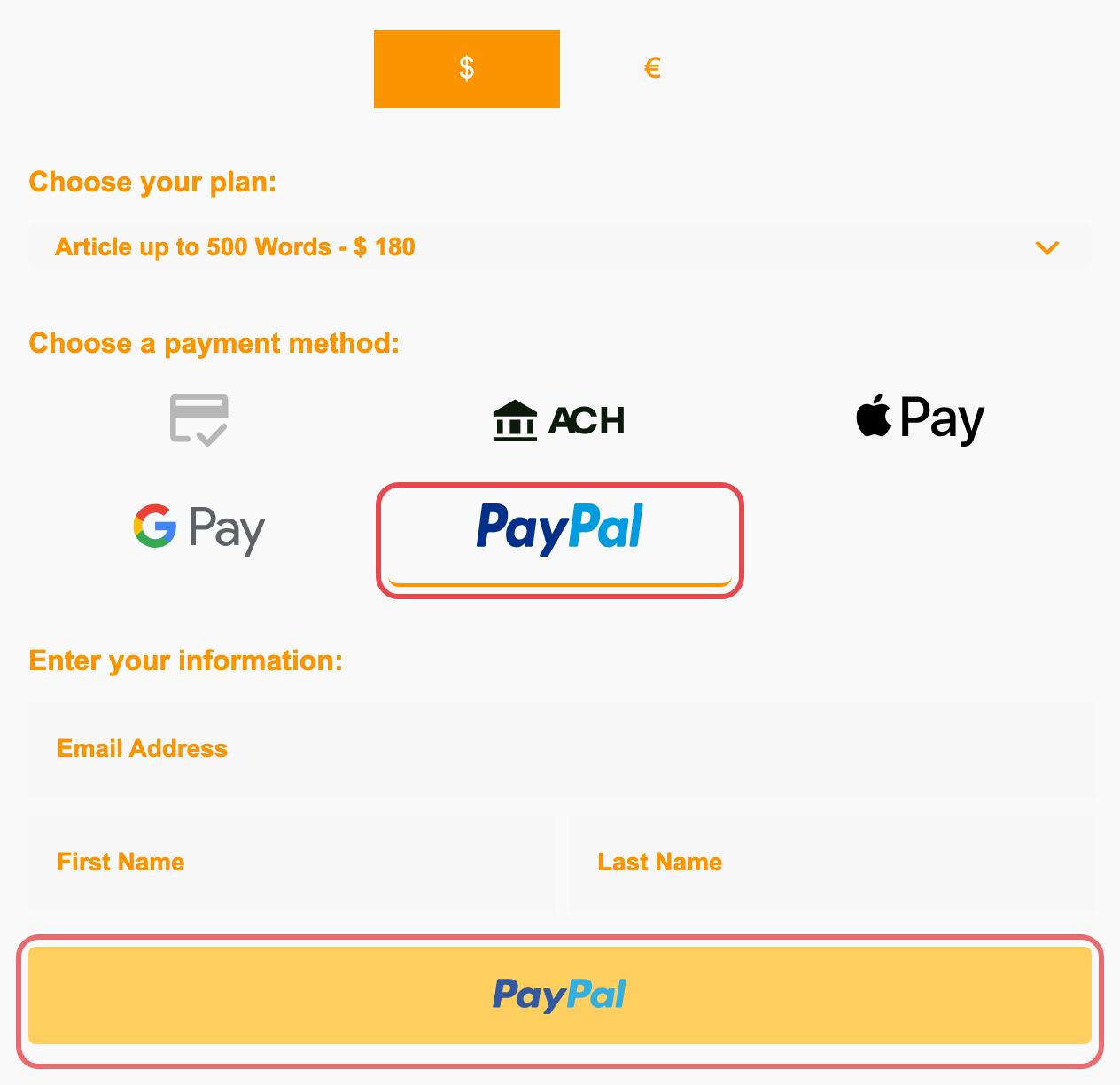
Payment Page offers PayPal Standard Checkout for one-time payments. Buyers pay with their PayPal account or a card through PayPal, in a PayPal window, without leaving your page. PayPal decides which options each buyer sees.
Connect PayPal#
Test and live mode connect separately. Start with test mode, which uses PayPal's sandbox.
- In the PayPal Developer Dashboard, open My Apps & Credentials and create an app: a Sandbox app for test mode or a Live app for live mode.
- In Payment Page > Payment Gateways, set the PayPal header's switch to Test or Live and click Connect with PayPal.
- Enter the PayPal business account's Email Address and the app's Client ID and Secret, then click Save Settings.
The header then shows the account email and Configured.

Then switch on Standard Checkout in the Payment Methods section of each form that should offer PayPal. Use a sandbox buyer account to test the checkout.
Set up the webhook#
The webhook lets PayPal confirm each completed payment to your site, which runs your after-payment actions. Set it up for each mode:
- Click Webhook Settings (Recommended) under the PayPal logo and copy the Webhook URL.
- In your PayPal app (sandbox or live, to match), add a webhook with that URL and select the event Payment capture completed (
PAYMENT.CAPTURE.COMPLETED). - Save it in PayPal, copy the Webhook ID PayPal gives you, paste it into Webhook ID in Payment Page and save.
Payment Page checks PayPal's signature on every webhook and only accepts a completed payment that matches one of your forms.
PayPal payments carry no Payment Page platform fee on either plan.